Pregnancy & Early Development
A Closer Look At Your Pregnancy
When you are worried, overwhelmed, or trying to decide what to do, it is understandable to want answers as quickly as possible.
Before making a decision, it is important to understand what is happening with your pregnancy and your health.
A Positive Test Is Only the Beginning
A positive pregnancy test tells you that pregnancy hormones are present, but it cannot tell you everything you may want or need to know.
An ultrasound can provide important information about your pregnancy:
How far along am I?
Knowing how far along you are can help you better understand your pregnancy and what may be visible on an ultrasound.
Is the pregnancy in the uterus?
An ultrasound can help determine whether the pregnancy is located inside the uterus.
Can cardiac activity be detected?
Depending on how early you are, cardiac activity may or may not be visible yet.
Is development consistent with how far along I am?
Sometimes an ultrasound provides answers right away. Other times, it may simply be too early to know, and another ultrasound or bloodwork may be recommended.
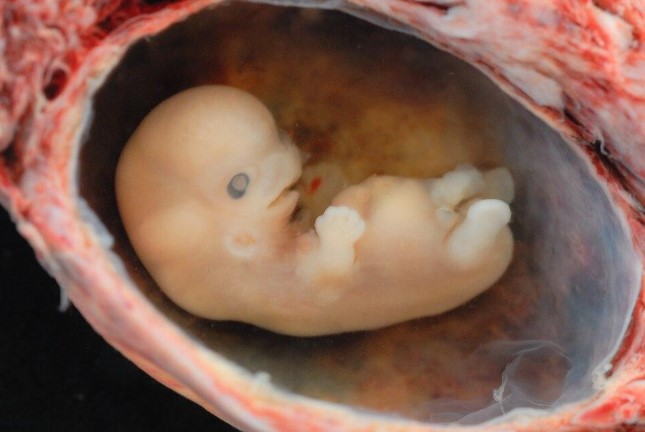
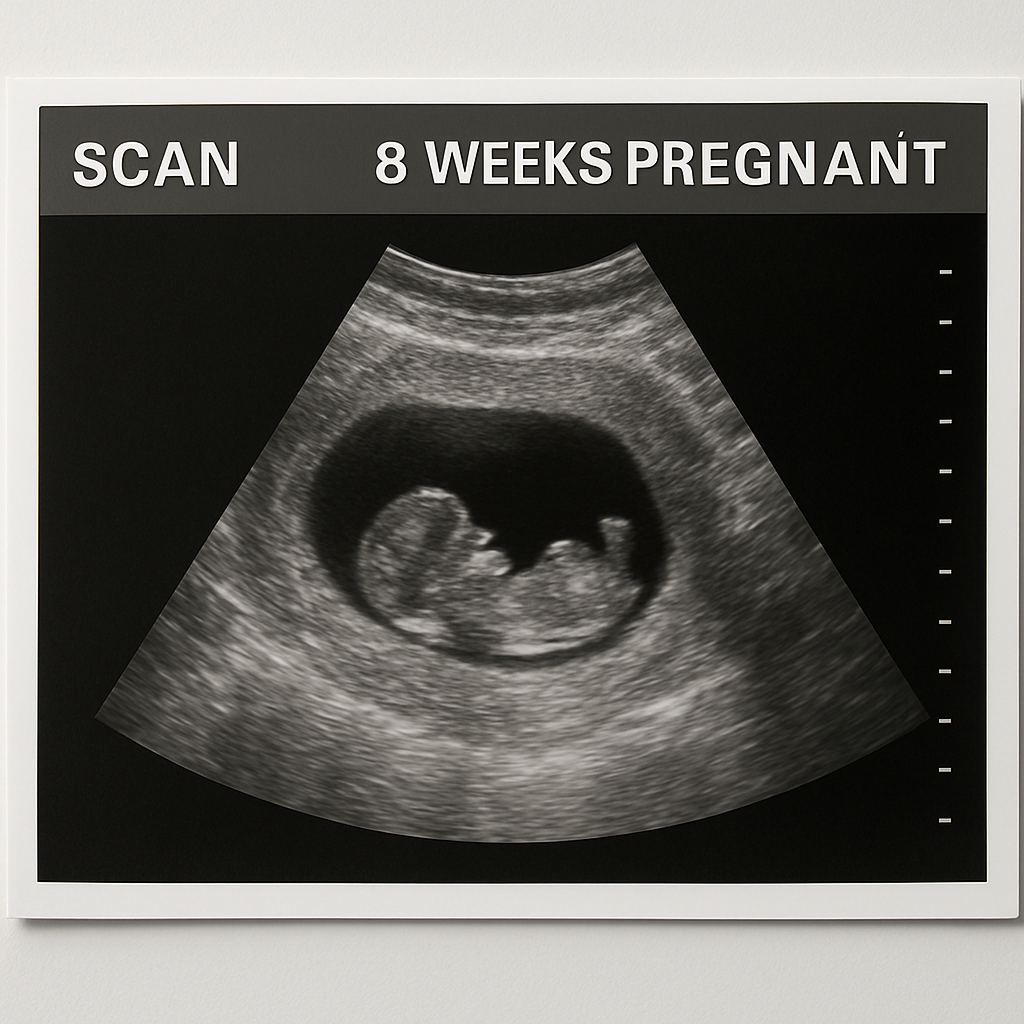
8 Weeks Pregnant
Approximately 6 Weeks After Conception
Pregnancy is measured from the first day of your last menstrual period (LMP) rather than from the day conception occurred. This means that at eight weeks pregnant, conception generally occurred about six weeks earlier.
Although the embryo is still very small, remarkable development has already taken place.
At approximately six weeks after conception:
- The embryo measures about ½ inch (11–14 mm) from crown to rump—roughly the size of a raspberry.
- The brain and face are developing rapidly.
- Fingers have begun to form, and the developing legs are becoming more defined.
- The eyes are noticeable, and structures that will form the outer ears are developing.
- The upper lip and nose have formed.
- The trunk and neck are beginning to straighten.
Development varies, and ultrasound findings may differ depending on exact gestational age.
8 Weeks Pregnant
Approximately 6 weeks after conception
Considering Abortion?
There Is Something Important to Know First.
Your pregnancy may already be ending naturally—and you may not know it yet.
10–20%
About 10% to 20% of known pregnancies end in miscarriage. Most happen during the first trimester, and the actual number may be higher because some miscarriages occur before a woman even realizes she is pregnant.
Source: Mayo Clinic
A positive pregnancy test alone cannot tell you whether your pregnancy is continuing to develop.
An ultrasound may provide important answers. Sometimes it can show that a pregnancy is no longer developing as expected. Very early in pregnancy, however, one ultrasound may not be enough to know for certain. Another ultrasound, bloodwork, or additional medical evaluation may be needed.
8 Weeks Pregnant
Approximately 6 weeks after conception
Why Knowing First Matters
If you are experiencing a miscarriage, your medical needs may be different. Depending on your individual situation, a healthcare provider may recommend allowing the miscarriage to progress naturally, medication, a procedure, or additional follow-up.
You deserve to know as much as possible about your pregnancy and your health before deciding what comes next.
8 Weeks Pregnant
Approximately 6 weeks after conception
The Earliest Stages, in Motion
The videos below offer a remarkable look at early human development during the first weeks of pregnancy.
So much changes in a short amount of time—often more than people expect. Week by week, you can watch these early changes unfold and learn what is taking place at your stage of pregnancy.
Life Before Birth
What makes Life Before Birth unique is that it features real images of the developing human embryo and fetus in the womb, offering a rare look at human development as it unfolds during pregnancy.
Baby Olivia
Baby Olivia is a computer-generated 3D animation that follows human development from fertilization through pregnancy. The video was created with input from medical professionals and provides a visual look at the earliest stages of human development.